The Secret Inside the Form: Alejandro Vega Beuvrin in Geometric Magazine
A conversation about geometry, political memory, and the sculpture that was designed to be a trap
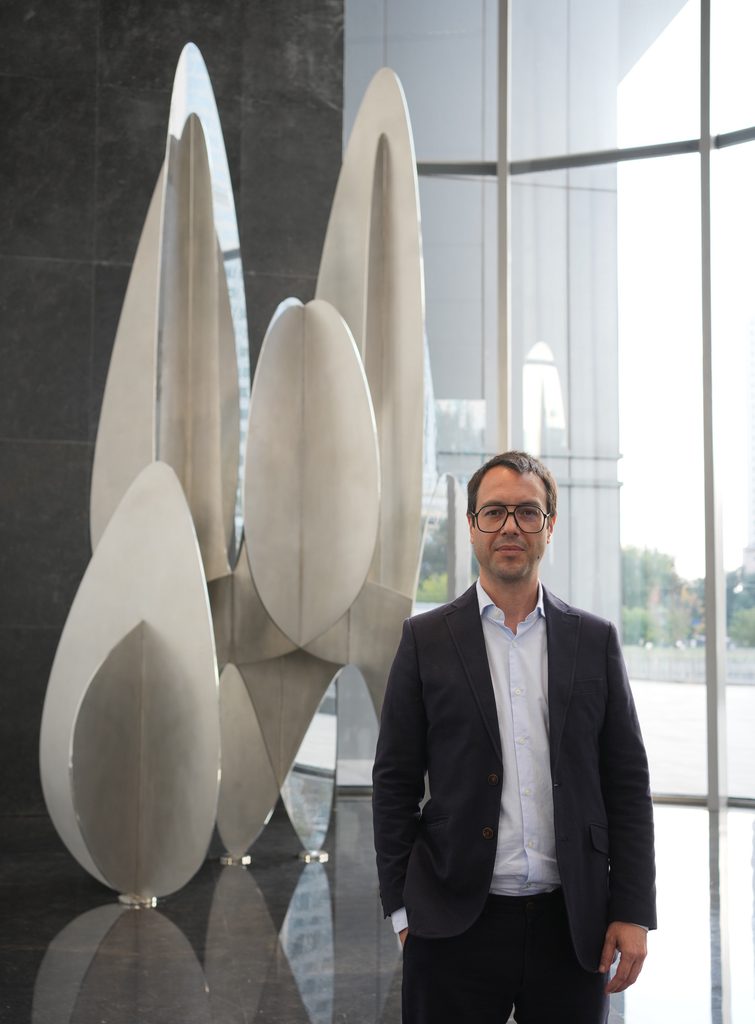
Geometric Magazine has published a profile of Alejandro Vega Beuvrin as part of its Selected Artists series — a space reserved for practitioners whose work redefines the boundaries of geometric art.
The conversation goes further than most. Rather than focusing on the technical process or the recent monumental commissions in China, the interview draws out the conceptual origin of Alejandro’s entire sculptural practice: the guarimba.
In Venezuela, that is the name for the improvised barricade that civil society builds in the street during protests — a structure without an author, assembled from whatever is at hand, that fulfils its function with precision: to be both refuge and barrier. That phenomenon, Alejandro explains, shaped how he thinks about form more than any artistic reference.
“The Barricada (Guarimba) series was born from a dilemma. I wanted to make public art and the first commission came from the worst possible client, the very apparatus of repression. The answer was a trap: I conceived protective structures disguised as abstract art, designed to wait in the street for the precise moment of being activated — when besieged protesters would need them as shields.”
The disguise worked. The first pieces were financed by the same forces that persecuted what the pieces concealed. They still hold that condition today — installed in public spaces across Caracas, Paris, Shanghai, Changchun and Nanjing, waiting.
The interview also explores his process — from the first point in digital space to the decisions of materialization — and his understanding of geometry not as a constraint but as a territory: one that deepens with each piece, each piece teaching the next what it can say.
“What does a viewer miss when they see your work as ‘just geometry’? They miss everything — and that is precisely the design.”
Read the full profile at Geometric Magazine: geometricmagazine.com/artists/alejandro-vega-beuvrin